Who Was William C. Goodridge?
Categories
Recent Posts
- Plan a Field Trip to CAY HCC: Teaching Black History in Pennsylvania Oct 10, 2026
- Chronology of The York Race Riots Oct 3, 2026
- Your Guide to Black History Sites in York County, PA (And the Businesses Carrying That Legacy Forward) Sep 14, 2026
- 9 Things to Do in York, PA This Fall Sep 14, 2026
- What Does A Membership Entail? Sep 3, 2026
William C Goodridge was born enslaved in 1806. His mother and grandmother were owned by Charles Carrol – a signer of the declaration of independence. At just six years old, Goodridge was sold to Reverend William Dunn to learn the tanning trade in York. He was set to be freed at twenty one years old, but Dunn’s business went bankrupt and Goodridge was freed at sixteen.
Goodridge left York to learn the barbering trade, then returned and began working in a local barbershop. He soon gathered wealthy clients that would give him tricks of the trade, then decided to start his own barbershop. In this time, he married a freed woman from Maryland named Evalina Wallace who became his business partner. Together, they had seven children, five of which survived.
Since the barbershop was doing so well, they decided to open a combined candy, toy, and jewelry store. In this store, they sold fiddles, halloween masks, and toys that made noise. Two years into their marriage, they began buying up real estate and within ten years, their worth was over one million dollars today.
Goodridge began to expand further with his businesses and bought up China Hall in York. This was turned into Centre Hall and had a number of businesses that rented from Goodridge. In Centre Hall sat the newspaper company the York Democratic Press, a tailor, Farmers Mutual Fire Insurance Co., the Worth Infantry Band, and his eldest son, GlenAlvin, who ran a photography studio out of the 5th floor.
As Centre Hall flourished, Goodridge opened a line of thirteen railcars that shipped out to Philadelphia which not only improved his business, but also aided freedom seekers. Abolitionist William Whipper assisted Goodridge in constructing one of the thirteen railcars to have a secret compartment in the bottom. Freedom seekers were hidden in this compartment and shipped to Philadelphia where abolitionist William Still would receive and take care of them.
William Goodridge was a conductor on the underground railroad. He had used his own home to hide escaping slaves in his cellar for months at a time, then would ship them out to Philadelphia when it was safe. Many people suspected him, but Goodridge was never caught in the act and helped hundreds of people find freedom.
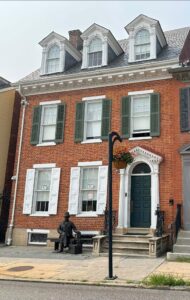
In 1994, the Crispus Attucks Association bought the former home of William C Goodridge on 123 East Philadelphia Street. CA originally used the home to house people, but after a few years of renovations, the home was opened to the public. In 2016, the Goodridge Freedom Center and Underground Railroad Museum was opened to showcase the history of William C Goodridge.
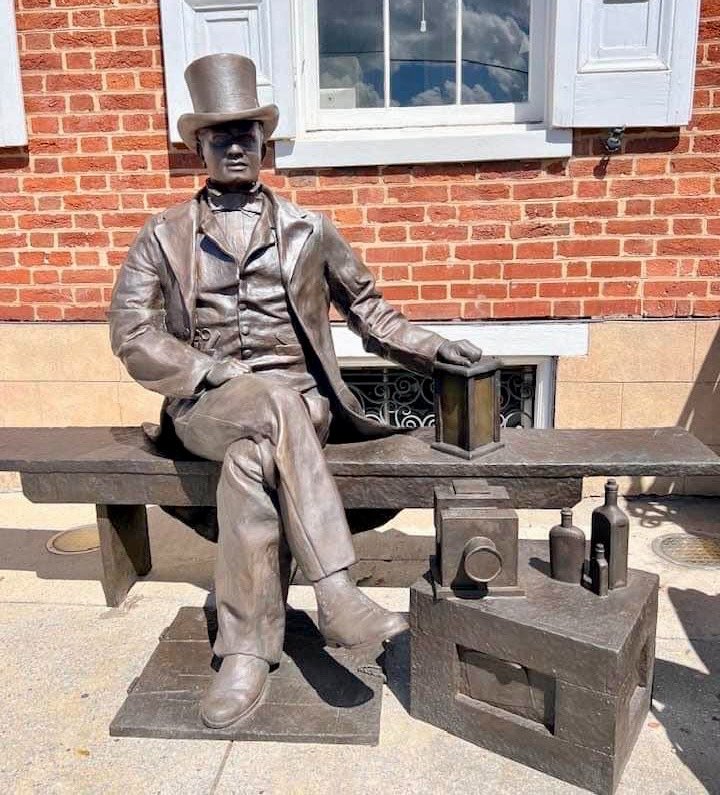
In 2022, a lifesize statue commemorating Goodridge was unveiled outside of the house. This was the first ever statue in York to depict a Black person.
To learn more about the accomplishments of William C Goodridge, visit the History & Culture Center or the Goodridge Freedom Center and Underground Railroad Museum today.