Chronology of The York Race Riots
Categories
Recent Posts
- Who Was William C. Goodridge? Oct 17, 2026
- Plan a Field Trip to CAY HCC: Teaching Black History in Pennsylvania Oct 10, 2026
- Your Guide to Black History Sites in York County, PA (And the Businesses Carrying That Legacy Forward) Sep 14, 2026
- 9 Things to Do in York, PA This Fall Sep 14, 2026
- What Does A Membership Entail? Sep 3, 2026
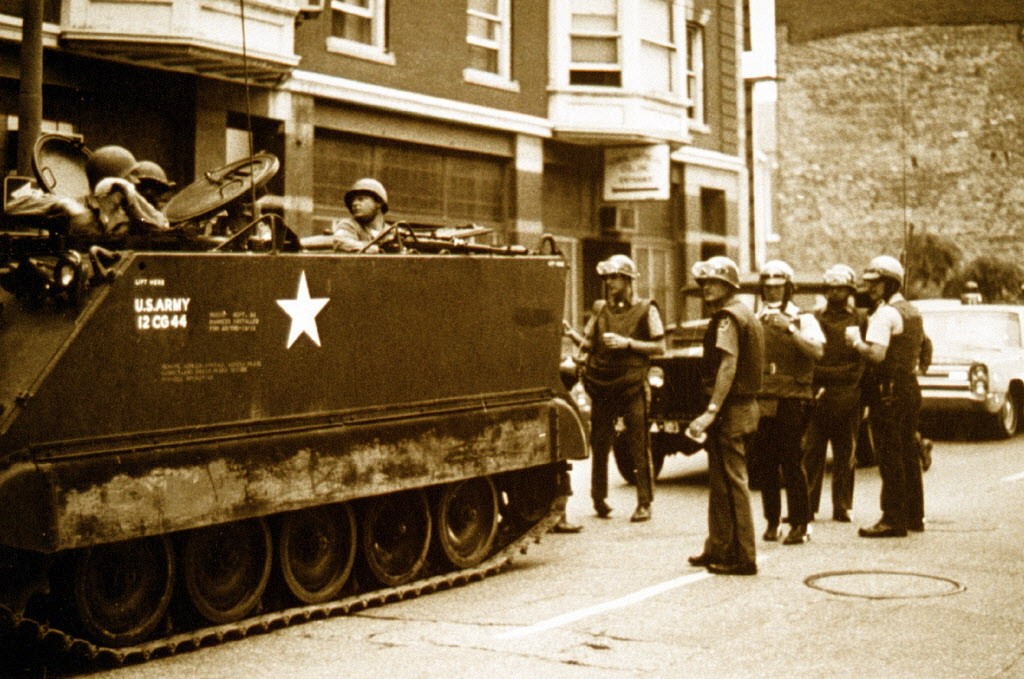
In July of 1969, York erupted into race riots that lasted two weeks. Multiple people were injured, their houses were searched, and the national guard had tanks rolling down the streets. Only two people were killed, but a number of people were still injured and scarred to this day.
On Thursday, July 17, A Black youth reports he was burned in the face by a York gang known as the Girarders. Although the story is retracted, and later restated as true, it leads to an 11 pm fight between Black and White teenage boys at the corner of Newberry Street and Gay Avenue. Late that evening, two Black teens, Taka Nii Sweeney and John Washington, are shot by Bobby Messersmith, the first bloodshed of the riots.
The next day, gunfire spreads around the city, as eight people are shot. Among them is police Officer Henry C. Schaad, mortally wounded as he rode inside an armored car across the College Avenue bridge after 11 pm.
As the riots continue into Saturday, Mayor John Snyder asks the National Guard to intervene, and sets 9 pm and 10 pm curfews for juveniles and adults respectively. Police barricade off neighborhoods. State police arrive in the city.
Sunday, more people are shot, including two children wounded by police along the Codorus Creek. Two White gang rallies are held in Farquhar Park. The home of Black couple Frank and Marie Myers, a block from the Newberry Street Boys’ headquarters, comes under heavy rifle fire.
Monday, July 21, multiple people are shot. Among those shot is Lillie Belle Allen, who was killed at the Newberry Street railroad tracks just after 9 pm. There is a fire in the 400 block of West Hope Avenue, but firefighters are prevented from reaching the blaze by snipers; neighborhood volunteers man the hoses. Sixty-seven state police troopers patrol with city police.
On Tuesday, forty National Guard troops begin patrol, but shootings continue. A total of 57 people have been arrested, and 42 injured. Rain begins and drops more than an inch and a half over the next 24 hours, credited with defusing the violence.
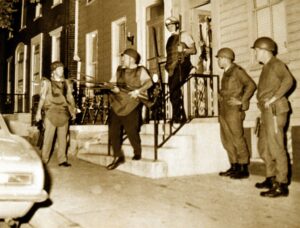
The following day, authorities search various homes in the Black neighborhood around Penn Street and College Avenue, seizing nine guns. One of six Black police officers, Elmer C. “Chip” Woodyard, quits the force, citing racial bias and improper use of force against Blacks.
Three homes of White residents on or near North Newberry Street are searched on Thursday; in one house, police seize 11 guns. Hundreds of rounds of ammunition and knives. A federal civil rights suit is filed in Scranton, alleging the Wednesday searches were illegal, as well as a litany of police abuse.
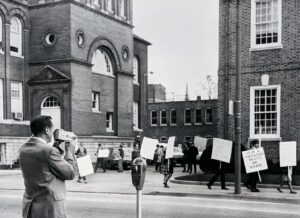
Friday, July 25, the National Guard finishes its patrols in York, and Mayor Snyder loosens the curfew. Sunday, July 27, the Governor lifts his order that put York under a state of emergency. And on Friday, August 1, Officer Schaad dies of his gunshot wounds at York Hospital.
These are only a few incidents that made headlines during this time. To hear more personal stories of the race riots in York, visit the History & Culture Center today.